Tuesday, August 31, 2010

Ip Man 2 review


Lazy but excellent-in-parts sequel, a must for fans if not the masses.


Plot: In this age of recycling and reuse, it's nice to know that for this follow up to the smash hit Ip Man I can simply reuse the same plot synopsis: simply delete where applicable.


Wing Chun master Ip Man is facing opposition from other Kung Fu schools in [Foshan province | Hong Kong] . After facing the other masters he gains some grudging respect, which is magnified when the schools must set aside their differences to combine against the [dastardly Japanese | nefarious British] led by the snarling [General Miura | Superintendent Wallace]. After a brutal showdown pitting the enemy against Ip Man's former protagonist and fellow master, Ip Man is forced to defend Chinese honour against the foreigners and show that Chinese Kung Fu (and in particular Wing Chun) is the best.

...and that's it - except for an epilogue that will have you grinning from ear to ear! To be fair there is one new aspect to the sequel, namely Ip's unruly students, who are happy to take up challenges from the rival schools, and cause much headaches for the master.


Performances: 
Donnie is very comfortable as Ip Man, no gear changes needed since the last movie (as he's going through the same series of events, basically). Smooth and accomplished, and funny to watch such a calm, measured character in contrast to Donnie in Tiger Cage!

As in the first film, Ip Man's wife (Lynn Hung Doi-Lam) is given barely any screen time or meaningful scenes, despite second billing. As before her role is simplified to briefly questioning whether Ip Man is all right, and where the money is coming from. There is, however, a near criminal waste of Simon Yam's talents, as he is reduced to a sideshow with a mere couple of scenes - in fact a repeat of his go-between character would have been welcome, cosying up to the British whilst secretly protecting Chinese interests.


But all is not lost: Old School funs will be delighted to see legendary actor and action director (in his seventh decade of Kung Fu cinema!) Feng Hak-On giving a terrific cameo as
another Hong Kong master, ably backed up by fellow old school favourites Lo meng and Lam Hak MingKent Cheng even turns up as (you guessed it) a police inspector, and carries it off well as usual, especially when he starts having doubts about his (and British) corruption. 


And, of course, the major pull of this sequel is Sammo Hung (a mere six decades in Kung Fu!) and his fights with Ip Man. Sammo gives a commanding performance as Master Hung: initially at odds with Ip Man, but retaining dignity and respect as his position changes. He is certainly no one-dimensional bad guy, with his family life and his rationale shown. With this performance he may have cemented himself as the key figure in Kung Fu cinema history, between acting/fighting/directing/action directing/producing since 1961. He shows some of the best acting within a fight that I can remember with his performance here, outstanding.


Fan Siu-Wong has actually had his character (Jin) developed since the first film, and is older and wiser, expounding advice well to Ip's real-life senior student, Wong Leung (played by Huang Xiao-Ming). Wong is a good balance of feisty upstart and penitent student, and the epilogue sets up Ip Man 3 nicely - whether Donnie plays a major role or not.


Sorry to say there are one-dimensional roles, given to (you guessed it) the British despots. A shame, because the dodgy copper Charlie Mayer is a Shakespearean actor, and Darren Shahlavi does well with the loaded material he's given to work with, delivering it with a frothing, snarling gusto. One can only assume the production saved on catering because of the amount of scenery these guys are give to chew on - let's hope the gwailo scripwriters are a bit more generous next time.

Training: Very weak. This was a real opportunity to explore *why* Ip Man believed in Wing Chun, being faced with a multitude of Kung Fu styles. Instead of another crowbarred-in scene where Ip Man has a pointless chat with his wife in bed, there should have been some Warriors Two-type discourse about the methods, techniques and fighting ethos of Wing Chun. I'd love to hear theories and see practicals on why Ip believed it to be superior to Hung Gar/Mantis fist etc. .Even the immortal (wooden dummy) scenes are lazily filmed, so you don't get a feeling of what is being done (or why).

Fights:
As expected, these are good to excellent. We start off with Ip slapping around potential student Wong, with the usual up-close and personal high-speed arm-slipping, block-and-counter simultaneously, chain-punching signature Wing Chun style. Wong has a (in comparison) amateur bout with the Hung Gar students, all flail and little finesse. There is a cracking dust-up at the local fish market, Ip having to resuce the captive Wong, and making imaginative use of warehouse pallets as well as fish cleavers - gripping stuff!

The films climactic fights, in the boxing ring against 'World Champion' boxer Taylor Twister (Shahlavi) are ferocious and bloody, both Sammo and Donnie fighting for their lives aginst the devastating hooks and uppercuts of the Westerner. Kicking is banned once Donnie starts being too effective with them, which is a shame because Darren Shahlavi is an expert kicker from his Muay Thai, Kickboxing and Karate training! Of course, that wouldn't be boxing, but given that all the other rules are broken they should have sneaked it in....the final pounding that Donnie administers is almost equal to the 10 v 1 sequence from the first film, but not quite.

But for me the highlight of the film comes halfway through, with Donnie taking on the old school legends one after the other, precariously balanced on a tabletop perched atop stool legs. He faces Lo Meng's mantis fingers, and Feng Hak-On's graceful, expansive (white crane?) style with aplomb, before a hold-your-breath machine gun of a fight with Sammo. I'll leave the result to your viewing pleasure...

Overall: 3 out of 5, lazy plotting and missed opportunities taint some superb fights and a poignant performance from Sammo.


Monday, August 02, 2010

ShaolinChamber36 is back!

Fans of the Fu will be delighted to hear that  has been given a full revamp and is now live. Raymond has done a terrific job and added lots of media features (sleeves, video and audio clips) to supplement the reviews and articles. You can also support the site by buying movies from the HK Flix links to the featured movies. Check out the chamber at www.shaolinchamber36.com - Buddha Bless You!

Wednesday, April 07, 2010

Ip Man 2 English Trailer


English (well, Australian) trailer for Ip Man 2; good to see Sammo fighting again!

Wednesday, March 03, 2010

 Showdown at the Cotton Mill (1978)

"I killed his father in seven strokes. To kill him, three would be enough."


When this supposedly-lost, almost mythically rare follow-up to 'Men from the Monastery' and 'Shaolin Avengers' was discovered by Toby Russell in Taiwan, and released via his Rarescope imprint in 2005, the initial delight of its availability was met in some quarters by disappointment. This was in no small part due to the damaged nature of the sourced print; but now that the DVD has been out some time it can be reviewed on its own terms away from the hype.

Trailer:


(from Abbot White's You Tube channel, made by the Abbot himself - cheers :)


Plot: Right - let's get one thing straight. If you are watching this film for cotton mills, you will be disappointed. According to the box blurb, Hu Hui-Chen (old stoneface himself, Chi Kuan-Chuan) has achieved much fame and glory from smashing the titular mill. But it's nowhere to be seen, or even mentioned. If you can get over this crushing disappointment, though, you're in for a treat.


The Canton/Shaolin population are (as usual) under the thumb of the dastardly Ching/Wutang aggressors. Shaolin student Hu has had his father killed by this regime, and proceeds to batter his way through their number in a series of terrific rumbles (more on those later). Whilst his wife and child hide away, the Shaolin school and rival Chin Lun Wutang school attempt to respectively protect and capture Hu, the Wutang using an ever-tougher cadre of corrupt officials and kickers-for-hire, culminating in Flash Legs Tan Tao Liang himself.


After tricks, treachery, treason and a synonym for kidnap that starts with 'tr-', we're down to a battle for the fate of all Canton - but can a seriously injured Hu prevail...? (Spoiler: Yes.)


Production: It's your typical movie Canton village: dusty main road, teahouse, bookstall, a few alleys and *that* temple. There's some occasional attempts at arty direction with handheld camera (or possibly a drunk cameraman) otherwise it's all done with minimum fuss. There is a recurring theme wherby Hu's challenges to the Wutang are written out on stackable lanterns and hung up all around town - including the forest! Nice gimmick.

The soundtrack is worth mentioning: rather than 'borrow' the cues from a Spaghetti Western, the traditional score rather sounds like how a Spaghetti theme and incidental music would sound if it was composed from scratch with Chinese instruments - very interesting!


The opening credits are stylish and fun:


Fights: Absolute dynamite. Unusually for most good guys in a traditional film, Hu has an aura of sheer brutality, no mercy asked or given.  This suits Chi Kuan-Chuan's stoic demanour to a tee, and he comes across as cold-blooded as a Hwang Jang Lee villain. This lends the fights a real edge: vicious shapes, kicks, ju-jitsu holds and ruthless killer blows. When Tan Tao-Liang hits the scene, it's pure Northern Leg vs. Southern Fist (well, fist - claw - snake - crane) and it doesn't disappoint; Flash Legs delivering his patent left leg multiple turning kicks, jump reverse and devastating sidekick.

 It's not often you see the bad guys showing fear in the fights, but they have it in spades here. The death scenes of the Wutang are outrageously over the top, lashings of slow motion and false-alarm recoveries. There's very little preamble between the fighters too - no pleas-bargaining by the good guy for a peaceful resolution, just get stuck in!


 It's probably no coicidence that in the final fight the bad guy wears white, with Hu donning black threads: he's definitely more anti-hero than hero, and the fights are all the better for it. One curious tactic though: why is Hu fighting with his hair in his mouth...? He deliberately stuffs the end of his ponytail into his gob. Maybe it was soaked in Red Bull?

Note that this may be the only traditional film which features multiple scenes in a teahouse with eating, drinking, but no fights. This is an interesting business model for teahouse owners, and should certainly save costs of replacing crockery/furniture/murdered waiters.


DVD transfer: The sourced print is washed-out, missing frames and shows alarming colour bloom at parts. It seems that parts of the print are missing, which would explain the lack of a cotton mill - also the fact that Kung Fu clichés like the villains harassing a girl in the street appear rushed.

Also the subs are embedded and even when they are readable make little sense at points. But don't let that put you off: it's a widescreen print, and the extras are wonderful, with a 5-animal style demo, star interviews and a Tan Tao Liang/Chu Kong Taekwon-Do demo! Great cover too.


Overall: 4.5 out of 5. The fights are outstanding, and despite the confusion around the minimal plot it clips along nicely. Well worth it for the leads' charismatic performances. A remastered complete transfer would probably get 5/5.

Friday, September 11, 2009

Fists of Bruce Lee

Plot: Late 70's Hong Kong: ailing gang boss Master Lo (Chan Wai-Lau) wants to beef up the security system of his mansion after an attempted break-in. The current security system consists of some precariously hung garden tools (such as a "magnificent flying rake" and a sledgehammer), so he wisely decides to upgrade to an electronic system. On receiving a mysterious coded telegram, enter detective Bruce Li; who takes the job undercover as an electronics expert. On his arrival in Hong Kong, Bruce is jumped by a welcoming committee (led by Ngai Ping-Ngo) but manages to liase with his connection at a hotel bar. On arrival at the mansion he meets the gang: effete toady Po Chee Chang, hellcat daughter Lam Mei-Ling, and not-in-the-film-nearly-long-enough bodyguard Lo Lieh. While Bruce messes around with the alarm installation and flirts with Mei-Ling, the plot gets murkier: two rival gangs are after a list of names in Master Lo's possession, which somehow add up to a street value of £3 billion (which in those days was a lot of money). After a series of double-double-double crosses which will leave your head spinning, and which includes a great enemies being taken down one at a time sequence, it all boils down to Bruce vs Lo Lieh in a fight to the death. Well, almost, but the full ending is too complicated to convey in written language.


Production: directed by Hu Chung Tao for Lucky Star, this is low budget but with a good cast of known faces (Lee Keung, Hau Pak Wai, Wong Chi-Sang, Wong Fei-Lung to name a few) and some clear effort to make it a bit more colourful. The credits sequence features Bruce in a GoD tracksuit sparring blindfold to The Average White Band's 'Picking up the pieces'. We later get snippets of 'Live and Let Die', wah-funk, and rather cheekily, 'Enter the Dragon'. Locations are average but with some funky interiors: check out the hexagonal bar billiards table Lo Lieh is playing on, even he looks confused. There is a bit of novelty with a night fight at a funfair, and the usual array of shocking 70's fashions: some of the shirt collars could be used as emergency runways. There is great use of European baddies, especially the blonde Robert Kerver (the Russian kicker from Snuff Bottle Connection) who is dubbed with a Chinese accent and dresses like Napoleon Dynamite - Geek Fu! Some dialogue highlights: "I don't like sunlight, and I don't like you", "My father was a Shaolin expert, I learned Kung Fu in the womb". And the "Hotel Fortuna" is hilariously mispronounced as the "Hotel For Tuna", which is nice given the plummet in world fish stocks...

But is it Bruce? For the most part of the film Bruce Li does not try to copy Bruce Lee's signature tics and moves; rather he is pretty laid back in his acting. For the fights: the earlier stuff is simple punch and block with some signature Bruce Lee facial expressions , with the night fight at the playground reminding me of the alley scene in Way of the Dragon with the colourful array of multi-ethnic villains.
There is even a fight that could almost be classed as shapes!
It is only in the final fights of the last twenty minutes that he starts to truly 'Bruceploit': sudden head flicks with mean stares, yelps with every strike, windmilling overhand punches and brutal sidekicks. We even get a slow-motion leap and stamp on a prone opponent, and a cut cheek (but no tasting of the blood). The fight against Napoleon Dynamite is good, with blondie resorting to hidden weaponry; and this all leads up to the showdown with Lo Lieh. Lo is suprememly badass here, with a steel hand and another trick up his sleeves.


Overall: 3 out of 5, the continual plot twists will drive you nuts, but the fights keep it going until the last half hour which is well worth a look. Version watched was a UK PAL fullscreen, 96 mins, dubbed; a widescreen version is (as always) worth it to get the most out of the fights.

Thursday, August 27, 2009

Revenge is a dish best served thoughtfully

Revenge is a theme as old as stories. It's a simple narrative mechanism that cuts to the core of our moral fibre: somebody has been wronged, now they put things right. Psychologists would argue that the theme of revenge can also act as a metaphor for all the struggles in our lives being overcome; and hence revenge has been a crowd-pleaser throughout the centuries, especially among the working classes who historically have incurred the worst deal. Kung Fu movies (and Spaghetti Westerns, or Black Action, etc.) thrive on revenge - ask a friend to parody a line from a Kung Fu movie and they will likely say 'You killed my father, destroyed my school and brought shame to this village!" or some such.
Revenge is therefore a pretty convenient shortcut to getting viewers to root for one side over another, with the added dimension of spectacular violence bringing thrills and danger to the equation. Such convenience can result in, shall we say, certain quality issues. Without having to establish any of a character's background, behaviour or perspective, the mere sight of them being beaten by a gang or having their family victimised is seen as sufficient grounds to set them up as a hero. A richer plot would ensure that we empathise or at least understand a hero on their own grounds, and root for their approach to life/humour/fairness/compassion. In these cases the hero tends to be a more well-rounded character, and because we like them regardless of particular events, we want them to win out regardless of whether they are pursuing vengeance. Good examples here would be David Chiang Da-Wei in The Loot, where the rich , original plot itself is one of the stars, leaving to highly entertaining interplay between the protagonists. Also Jackie Chan in The Young Master: although he is on the losing end of some cheating in the opening dragon dance, there is little stress on personal revenge in achieving the task of getting the Hwang In Sik character behind bars. This allows Jackie to fight throughout in a cheeky and entertaining fashion, including the hilarious end fight which would not have been possible if Jackie had started the fight with revenge driven bloodlust. More recently 'Shiro Obi' (Black Belt) had a triptych of characters with different reactions to the exploitation of their school by the army, showing different shades of revenge and acceptance - each changing subtly throughout the film.
Of course that's not to say revenge is a bad thing for Kung Fu movies (or Spaghetti Westerns, or Black Action, or Heroic Bloodshed etc.). Sometimes, even when overall character depth is not established particularly well, the acting and action can justify it: look at Bruce Lee's boiling rage throughout Fist of Fury, which lacks the more subtle 'benevolent enemy' dimension of Fist of Legend, but is no less entertaining. Or the barely coherent plot of 'Showdown at the Cotton Mill': only by reading the sleeve notes do you (a) work out there's a cotton mill in the film and that (b) there's some sort of corruption underway, but all this is ignored because of the brutal, relentless savage-hero fights of Chi Kuan-Chun. And then of course you have the revenge masterpieces like Lone Wolf & Cub, Lady Snowblood etc. where the act to be revenged is set up early and plays out through the saga, with further revelations of the back story and a long-term goal interspersing the side-action.
It just is very easy to use revenge lazily as a plot device. For example, Five Fingers of Steel was chugging along very nicely, before a brutal extended rape sequence was crowbarred in just to show to everybody just how really, really, bad the baddies were; before adding to the distaste with some infanticide. The 15 minutes this all took would have been much better spent with a Yuen Miu training sequence under the tutelage of Hwang Jang Lee which was sadly lacking in the film. For me the sight of Kwan Young Moon 'Bwa-ha-ha' -ing and Chan Lau toadying was enough villainy for me: I don't expect Shakespeare in my Asian cinema (well, Throne of Blood and Ran excepted ;) but at the same time think that if the writers are stretching themselves at the expense of fight time then there are plenty more ways to establish more depth to the characters' villainy.
Here's hoping that we will see some richer plot narrative in the coming decade - such as Ong Bak 2 where Tony Jaa progressed from 'You stole my idol/elephant' (delete where applicable) to a stronger evolving plotline with ambiguous enemies. Revenge is sweet, but good plotting is sweeter...

Tuesday, July 28, 2009


Five Fingers of Steel

Plot: A grisly murder is being investigated by the local governor as Captain Yu (Yen Shi Kwan) arrives in town to woo his cousin at a family gathering, hosted by his Uncle and family patriarch Yu Hu (Lau Hok-Nin, in a greybeard 'disguise'). Yu Hu is one of those respectable, older martial artists with an extremely slow fuse: when rascals from the local 'One Kick School' barge in uninvited, he lets them trash the party with a drunken Dragon dance. Of course, the slowest fuse is often the most dangerous, and he administers some firm bashings to help his hot-headed nephews overcome the ne'er-do-wells.

Meanwhile, Mr Chan (Chan Lau, the snivelling lackey's snivelling lackey) toadies up to the governor to convince him to use Captain Yu to courier the town treasure, via his Ping-Ah escort company (no, not that sort of escort company). But wait! It's all a set-up to ambush Captain Yu, masterminded by the head of One Kick School and usurper to the governor's seat, Mr Choi (Kwan Young Moon). As Captain Yu is defeated in shame, his beloved is taken (and gruesomely ) by Mr Choi and he is imprisoned. After a prison break he falls in with hermit Wong Lung (Hwang Jang Lee), an old enemy of Mr Choi, and rescuer of Captain Yu's collegue Lung Chan (Yuen Miu) from the treasure ambush. A posse is raised and the two are hounded through the countryside, including an imaginitive torchlight arrest; but they escape back to Wong Lung. The grisly murder from the start is resolved, leading to an imaginative final showdown on an isolated wooden platform in the woods: Kwan Young Moon vs Hwang Jang Lee!!!!

Production: Nothing too lavish in terms of scenery or costumes, the usual dusty plateaus and forest paths play host to the fights. Music is a mix of Spaghetti with wah-funk and traditional Chinese for good measure. Some hilariously varied dubbing, ranging from Texas drawl to English West country (oo-ar!!). There's a particularly nasty subplot involving graphic rape and infanticide which I, personally, could really do without: Kwan Young Moon's "BWA-HAH-HAH!!" Todd Slaughter-esque villainy and Chan Lau's toadying is enough to tick all the bad-guy boxes and still be entertaining, really no need to sledgehammer the point home about how really really bad they are. Would have much preferred an extended training sequence instead...

And the film has one of those strange 'sudden endings' you get now and again: see also 'Shaolin Deadly Kicks', 'Sixty Second Assassin'.

Fights: The first barney at the wedding is fast hit-and-hope but filmed with an engaging energy. Patriarch Yu steams in with some tasty palm to show the cheeky upstarts from One Kick School, who, despite ther alma mater don't appear to be the best kickers. The Escort party has a great tumble with some hoodies. The prison escape sequence is good fun, making good use of the prisoner's shackles and including a tubby jailer being beaten in the belly repeatedly.

Two standouts: the torchlight forest sequence, making AMAZING use of flaming torches with very little caution. You flinch each time there's a thrust! Great stuff.

And, of course, the big one: Hwang Jang Lee vs. Kwan Young Moon. Two of Korea's greatest kickers face off for a revenge-fuelled blistering barrage of blazing boot! OUTRAGEOUS triple kicks, a leaping kick to the neck (!), a back kick to the head: the boys really let fly and of course this is Manna for the boot fan. Without spoiling too much, the other heroes Yu and Lung weigh in with a short sword and sai, and Kwan has a trick up sleeve (or rather near his socks...). In fact the only minor grumble is that I would have preferred the whole fight to be HJL vs. KWM, but overall the fight is excellent.

Training: HJL trains by kicking over trees. These are possibly from a sustainable forest, but that's not clear from the end credits...he also has a great array of coconuts in a wooden frame to kick and claw!

Overall: 4/5, excellent fights, some good-but-short training and only loses a mark for some lazy villainy. ESSENTIAL for boot fans.

Monday, July 20, 2009

Putting the boot in: My Top 10 Kickers

Note: this article also appears at Shaolinchamber36.com - if you want to be a disciple, enter the chamber!

I would argue that what makes Kung Fu fight scenes special are kicks, more so than weapons and hand techniques. Poles, halberds, soft swords, nunchaku are all spectacular to watch; and offer some dazzling conflict that is quite fantastic, in the old sense of the word - in other words not easy to relate to or think you can copy yourself. Brutal punch and block is fun too, but in this context suffer the opposite problem to weapons - the movements are familiar and hence are not spectacular enough. Wicked shapes (eagle claw, crane fist etc.) inject novelty into hand fighting, and lead to excellent training sequences, but the gravity-defying kicks have a special place: they are simultaneously far-removed from the average person's capabilities, and yet achievable using nothing more than the legs you were given and years of practice.

A spectacular kick is difficult to pull off, and a combo of multiple kicks even more so. Now, I say 'spectacular' because Kung Fu movies are about spectacular kicks, not necessarily effective ones. The same can be said of punches: John Wayne's 'all or nothing' haymaker was telegraphed to the point where you could have watched one of his other films before it landed, so it wouldn't have been as effective as a quick poke to the eyes, but by Jove it looked hard.

An effective kick is pretty simple: deliver the correct tool to the correct target area at speed. E.g., a snap kick to the charlies and it's game over, same goes for a well-placed shin, knee, or thigh kick. All of these are achieveable by most people with minimal training because the leg does not have to go particularly high, and hence average flexibility and strength is sufficient. But of course if Kung Fu movies simply had these kicks we would miss out on a terrific range of flying, jumping, spinning an shifting kicks; often delivered in brutal combos.

So who is/was the best? When comparing the Jade screen kickers I wanted to use the following criteria:
  • variety of kicks: was it the same old boot time and again or did they mix it up?
  • speed and execution: including balance, accuracy and apparent force
  • combo ability: how did they string kicks together? The difficulty of a combo rises exponentially as more kicks are added, since the kicker has to recover to a stance each time, and make sure they can still aim for their victim whose target points have been moved by the previous kick.
  • career: how many top-notch kicking performances have they given us over the years?
  • 'kicking charisma': were the kicks ferocious and devastating, or just balletic and placed?
All marks out of 10. Right, with that out of the way, on with my Top 10:

10. Whang in Sik 36/50
Variety: 7. Turning, reverse, jump reverse, side kicks and good flying side kicks which doubled-up (see Young Master)
Speed and Execution: 8. Fast, balanced, the Hapkido Grand Master is always in control
Combo ability: 7. Good on the turn, see his first fight in Golden Belt. Strings together turning and reverse turning nicely.
Kicking Career: 6. When Taekwondo Strikes, Young Master, Dragon Lord as good examples.
Kicking Charisma: 8. Amazing in Young Master, incredibly vicious!

9. Bruce Lee 37/50
Variety: 6. Bruce would tend to concentrate on side and turning kicks with the odd reverse, and off course the famous flying side kick. No leg shapes as such.
Speed and Execution: 8. Lightning fast, only loses a couple of marks for the occasional sloppy kick (leg just lifted up behind awkwardly for a supposedly devastating blow)
Combo ability: 6. The most famous being the chain of reverse turning kicks in Fist of Fury, but see Hwang Jang Lee's version of the same in Canton Viper as comparison. Bruce's style was more about savage blows than stylish combos.
Kicking Career: 7. Obviously we lost him too young, but he left behind excellent kicking footage.
Kicking Charisma: 10. Goes without say, you could almost feel the kick in his eyes.

8. Yuen Biao 39/50
Variety: 7. Turning, reverse, jump reverse, side kicks and good flying side kicks which doubled-up (see Young Master)
Speed and Execution: 8. One of the very best reverse turning kickers (where you turn you back on th eopponent and then spin, whipping the heel of the rear leg straight to the head)
Combo ability: 8, because he mixes the kicks up beautifully with tumbling and comic expressions
Kicking career: 9. Knockabout, Prodigal Son, Wheels on Meals, Dreadnaught...and that's just the old school stuff! Add in the modern day classics (Righting Wrongs, Dragons Forever, Wheels on Meals) and then left-field action (Iceman Cometh, Champions) and you have a great portfolio.
Kicking Charisma: 8. Two gears here: comedy, where the kicks are fast and so well acted that he's a joy to wash in full flow.; or for modern day, he comes over well as the young man pushed too far and venting his anger on the msicreants.

7. Tony Jaa 40/50
variety: 9. Knees, back heels, outrageous off-kilter twists; he's brought a whole new breed of kicking to the fans.
Speed and execution: 9. The lampost kick in Tom Yun Goong; the knee takedown in Ong Bak - good grief.
Combo ability: 8, to be fair the knees are so deadly that it's clear the first strike is enough! But can string them together very nicely when he has to.
Kicking career: 7, only three starring roles in though!!
Kicking Charisma: 7. He can look a bit too relaxed in fights, he needs to work on this to inject some fury (after all, those bad guys just stole his statue/elephant/childhood!!!)

6. Kwan Young Moon
Variety: 8 Lots of little jumping (bicycle) kicks, angular reverses showcasing his long limbs,
Speed and execution: 9. Superb sidekick, and cat like balance for a taller man
Combo ability: 8. Depending on the era, really: earlier on he would throw one at a time, but for the new wave movies he was chaining turning and jump-reverse turning kicks, doubling up on sidekicks and landing multiple mid-air blows.
Kicking career: 8. Excellent pedigree but more often as back-up, he really was a "super sub" that you were delighted to see, whether as the boss (The Loot) or merely credited as 'The Leg Fighter' (Rebellious Reign). A shame he only got major screen time in a few films (Death Fist for example).
Charisma: 9. "Blessed" with a really fierce, mean look; somewat mitigated by a choice of suspect threads in his modern age bashers (Death Fist, Kill the Ninja,

5. Angela Mao 44/50
Variety: 8. Makes good use of the most popular kicks but doesn't go for the more esoteric stuff.
Combo ability: 9. The 'mistress of spin', able to stitch together multiple reverse turning kicks, turning kicks, side kicks.
Speed and execution: 9. Fast, accurate, and vigorous. Once she gets going there's no stopping her!
Kicking career: 9. When Taekwondo Strikes, Hapkido, The Himalayan, Enter the Dragon to name but a few.
Kicking Charisma: 9. Eyes of a killer, face of an angel; looks terrific in full flow, whether winning easily or desperately fighting for her life.

4. John Liu 45/50
Variety: 9. Arcing downward kicks, the face-sweeping vertical kick, consecutive kicks off the front leg, and some great leg shapes (see Instant Kung Fu Man)
Speed and execution: 10. Extremely flexible, fast, graceful and balanced. Never looks out of control. He trained under Tan Tao Liang who brought out the best in his stretches (although I don't believe that he forced him into splits beyond his range - that would result in pulled adductors…). Note that at times he is as guilty of favouring his right leg as his mentor is his left.
Combo ability: 9: Can keep going with one leg for multiple kicks, then switch to a rear-leg reverse seamlessly. Not averse to throwing in a full splits on the ground before leaping up to continue!
Kicking career:9. Kick-centric throughout, obvious classics such as Secret Rivals, Secret Rivals 2, Invincible Armour, Mar's Villa, etc...
Kicking Charisma: 8. Loses out a little here, he's such a talented kicker that he rarely looks overstrained or like he's really trying. His trademark smile is good in the breaks in fights but he never looks as fierce as, say, Wong Tao in the key battles, Best playing 'cool companion' to a sidekick who can provide all the burning vengeance.

2=. Casanova Wong 48/50
Variety: 9. Huge range of Taekwon-do kicks, especially keen to showcase his flying, spinning and jumping kicks often with multiple hits.
Combo ability: 10. See Master Strikes for an incredible 3-hit mid air combo, 'South Shaolin vs North Shaolin' for long, flowing, irresistible combos. Quite possibly the 'king of spinning', rotating like a manic top at high speed, throwing a kick each time - amazing!
Speed and execution: 10. Rumoured to be nicknamed 'The Human Tornado' in the Korean army, which has long been the foundation for the very best Taekwon-Do fighters. His flying 360 back kick at the end of Warriors Two may be the best single kick I've seen.
Kicking career: 10. So many great moments from 1977 up to 1985, catch them all!
Kicking Charisma: 9. Flowing style great to watch but maybe lacks a bit of facial fierceness and presence to give the strikes that extra edge.

2=. Tan Tao Liang 48/50
Variety: 8. Usually favours side/turning/reverse-turning with occasional flying kicks and low sweeps.
Combo ability: 10. low/high, low/medium/high turning kick followed by the reverse; also turning kick, then hooking across the face with the heel and following up with the reverse being some highlights.
Speed and execution: 10. Outstanding, he may be a little bit slower than some but there's a gravity about him that makes everything graceful and vicious. Favours the left leg a bit but that makes for unusual consecutive kick-combos because the camera can capture everything from one side.
Kicking career: 10. Always delivers in spades: The Himalayan, Shaolin Deadly Kicks, The Hot the Cool and the Vicious, Showdown at the Cotton Mill...
Kicking Charisma: 10. Spaghetti-Western cool, his powerful but relaxed stance always makes him look in charge.

1. Hwang Jang Lee 50/50
Variety: 10. Uses every part of the foot (or boot) to devastating effect: twisting kicks, flying back kicks, and everything else from his TKD training (plus a few more he appears to have invented)
Combo ability: 10. Outrageous mid-air multiple front kicks; flying sidekick into flying back kick; mid-air twisting/sidekick; spinning reverse against multiple opponents...and let's not forget the brutal slap-slap-slap across the face as he lays in with turning & hooking kicks (see Canton Viper's 17-hit combo!)
Speed and execution: 10. So good he made The Art of High Impact Kicking - the opening sequence says it all as he delivers his varied armoury with perfection. And in Five Fingers of Steel, he trains by kicking down trees!
Kicking career: 10. Let's just say that even if he's in an otherwise dodgy film as a cameo (I'm looking at you , Eagle's Killer) then you have to catch it. And when you do get a better film chance's are you'll get some juicy Eagle Claw thrown in for good measure. Of course, Invincible Armour, Hellz Windstaff, Dance of the Drunk Mantis, Secret Rivals, Tiger Over Wall are essential - and I could just keep adding to this list!
Kicking Charisma: 10. He's The Silver Fox - 'nuff said. That stare - that manic laugh - the FURY in his eyes as he boots 'em senseless. Possibly the only man to look terrifying in a ludicrous blonde wig, or when dubbed like a Hanna Barbera villain. I'm still trying to create a machine that will take me to the parallel universe where Bruce and Hwang in their prime had a staring contest...

Honourable mentions who did not make my 10:
Jackie Chan - his panicky hyper-kickboxing has delivered some cracking boot moments over the years.
Lily Li - Balletic stances and great novelty kicks
Ken Lo Kwai Wong - Tall, leggy and brutal Muay Thai, the final fight in Drunken Master II is essential.
Ron Smoorenburg - outstanding flexibility and technique, cracking fight in "Who am I?". Just needs more films!
Jet Li - some terrific kicks in Fist of Legend but has too much wirework to be a serious contender for my list (although we all love the No-Shadow kick from Fu-Shan :)
Donnie Yen - comes across as really powerful (see Flashpoint) and is a terrific all-rounder, just to my mind edged out in the modern kicking stakes to Tony Jaa.
Bill 'Superfoot' Wallace - surely Hollywood's finest ever kicker, and apparently nicknamed after a Hot Dog! His 60 mph left leg was devastating. His competitive career took precedence over his films otherwise I'm sure he would have made my list.
Chloe Bruce - 18 years Tang Soo Do expertise, staggering flexibility, amazing speed (see www.chloebruce.co.uk); HK and Hollywood directors need to give her the starring role she deserves (hint hint)
Oh, and I love Chen Singh kicking - not as graceful as others, but that's one beefy hoof he packs!

Further reading:
This article was my attempt to come up with a way of ranking the great kickers. For further history and background, check out the following:

Albert Valentin's four-part http://www.kungfucinema.com/the-art-of-kicking-part-1-the-kickers-of-classic-kung-fu-3346 looking at eras in kicking history from early Kung Fu through to New Wave and Hollywood.

From 2003 but worth a look: the bootmasters page http://www.bootmasters.btinternet.co.uk/text/introduction.htm

You Tube has a wealth of kicking clips - just search for the kicker or film, and dig out montages like this:
http://www.youtube.com/watch?v=RjW2AbSD-YA

The kicker's biographies may be found at www.flkcinema.com

Thursday, June 11, 2009

Mortal Battle AKA Kill the Ninja

A trio of rogues steal a shipment of smuggled cash, but before long they are fighting suspicion, mistrust and the Hong Kong Mafia!

Plot: A shipment of $2millon dollars concealed in a coffin has been smuggled into Hong Kong harbour, to a great Rod Serling-style voiceover 'Hong Kong:what a lovely place for a funeral'. Three friends King Kim (Bobby Kim), Pong Mar Kow (Hwang Jang Lee) and Shintaro (Kwan Young Moon) gatecrash the monastery where the money (secreted in a statue) has landed, but driving away Kim is done for speeding and a suspicious copper confiscates the statue. As the gang plot a way to get it back, an office cleaning lady sells the statue to an antique dealer, and the gang start to suspect each other of stealing it for themselves.

Kim turns up at the sleazy nightclub where Pong hangs out with his girlfriend Lotus Lee and starts a fight first with the bouncers and then Pong. The old friends soon make up though, and go back to the club to discuss. Of course, you can't spell 'discussion without 'd-i-s-c-o' and so the pair cut a dashing step on the dancefloor to some outrageous 70's funk. In fact Hwang is so good here 'The Art of High Impact Dancing' could have been a bestselling video.


Meanwhile the local gang boss has rumbled them and sends his cadre of toughs against each in turn - one of whom decides to betray his fellows and take all the money...
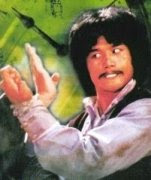
Production: From the team of Richard and Henry Park, this is filmed with an energy and camerawork influenced by arthouse US and French films of the 60's. Music is big band jazz reminiscent of the intro to The Hustler, and this all helps the film bounce along nicely. Locations range from building sites, the beach and a coal factory scene similar to the end of Dirty Harry. Dubbing is terrific, Bobby Kim's cigar chewing Charles Bronson-performance is helped by a 30's gangster film accent: "In this neighborhood, sweetheart, you don't need high heels, you need running shoes'. HJL sounds quite dopey but it all adds to the fun.
Fights: Fast zooms and cuts like a Spaghetti Western gunfight editing at double speed. The camerawork here is jerky handheld tracking, similar to the Krav Maga fights in Batman Begins. Which is a double-edged sword: while they add to the panic and adrenaline of the heroes being surrounded, it also means that many of the best moves are not seen in full. When it's the boots of HJL and Bobby Kim in action you can more or less keep the camera still and the number of edits down. There are some fun touches like kicking to camera, a double headlock seen from below, and a ludicrous leap from the 6th storey (using 'special' effects).


Fashions: Jawdropping, I mean almost criminal in parts. Sparkling white flares, Jon Pertwee-era Doctor Who ruffled shirts, jackets with enormous squares and colour clashes that will have your DVD decoder weeping at points. And did you even know there was such a thing as a kipper cravat? I didn't. Worth watching for this aspect alone.

There's Ninja in the title, but is there a Ninja in the film?: No.

Overall: 3.5 out of 5. A must for fans of grimy city bashers like 'Iron Dragon Strikes Back', this is a notch above Hard Bastard, and a great Friday night lark. Only downside is the overenthusiastic camerawork in the fights

Monday, April 27, 2009

Buddha Assassinator

Plot: After a nice studio fight intro ("There was much conflict in the fighting world...") featuring Corey Yuen Kwai, bumbling dogsbody Hsiao Hai (Mang Hoi) is bullied at the local Shaolin Temple, forced into demeaning chores such as the dreaded 'pillar dusting duty'. A kind hearted oaf, he still manages to take care of his (suspiciously young looking) Ol' Dirty Uncle San Lu (Chin Yuet-Sang), who has a predilection for dog stew. Hsaio fortuitously saves a visiting prince (Hwang Jang Lee) from an assassination attempt, involving Hsaio's sister (nbeknownst to him). The Prince favours Hsaio, inviting him into his entourage whereby the strutting Hsiao takes full advantage and beats up his former bullies. The Prince's jealous head honchos Mo (Lung Fei) and Chow Erh (Hau Pak-Wai) frown upon this accident prone newcomer and plot his doom. Meanwhile Hsiao, after serving up the Prince's favourite lapdog to his ever-hungry uncle, discovers that the Ching dynasty-supporting prince is an exponent of the aggresive Lo Han style, a sworn enemy of his uncle's buddha fist. Uncle teaches Hsiao the buddhist fist, and when the Prince discovers that a style he swore to destroy still survives, the gloves are off: it's Lo Han vs Buddha Fist!

Style: Some half-decent temple and palace locations, plus the Prince's secret room where he practices the sleeping fist form is an hallucinogenic delight! Funky wah music mixed with pan-pipes.

Training: Two standout sequences; the Prince's sleeping fist form is superb: a sleeping HJL leaps from his bench and throws furious leg and hand shapes, roaring with laughter, and then throws himself back to sleep again!


The Buddha Fist features a five-elements style - Metal, Wood, Fire, Earth and Water; with each substance used to train different attributes (hardness, sharpness, roundness, speed, etc.).


Fights: A game of two halves- mostly comedy to start, Hsaio's return to beat up his former bully monks ends up in a full scale bundle (for those who grew up in 70's South London :). Later there's a tumble in the local gambling parlour including a stack of benches to pin the miscreants down. The assassination attempt itself is nothing special, but as soon as the training starts the whole movie shifts a gear. Immediately Lung Fei and Hau Pak-Wai are brought in to deliver a fierce duel attack with terrific co-ordinated spearwork and equally good tumbling blocks and counters from Mang Hoi. There's a gruesome ending to this fight involving a barrel, possibly inspired by Donkey Kong.


Hsiao has to use all the elements of Buddhist fist against the madness, fury and, er, sleeping of Lo Han; HJL has his work cut out and blags a Halberd to help his trademark boot. The tide starts to turn when Hsiao pulls off the Prince's ponytail and uses it as a weapon against him. A cracking end barney, reminded me of Chess Boxing's end battle with constant, clever shapes; tumbling and varied attacks.

Grammatical correctness of title: Yep, it's a real word: whereas 'Buddha Assassin' could be interpreted as as assassin from Buddha, 'assassinator' makes it explicit that it's Buddha as an assassin's target. Next week: should it be "Millionaires Express", "Millionaire's Express" or "Millionaires' Express"...?

Overall: 3.5 out of 5, really a game of two halves with an average comedy storyline and underuse of Lung Fei and Hau Pak-Wai to begin; but once the training sequences start though it really ups its game and is an excellent closing 30 minutes. A must for HJL fans, of course.

Tuesday, April 14, 2009


Ip Man (2008)

Plot: Wing Chun Master Ip Man (Donnie Yen) owns one of the many Kung Fu schools in the 'martial street' of the city of Foshan in the early 1930s. There is fierce competition among the schools to lay the claim to teaching the best style; this is evinced firstly by the (mildly rude) challenge from new-arrival Master to Master Ip whilst dining in his beautful family home, and secondly by the outright agression of a Northern gang led by ('Ricky' himself). The in-fighting is overshadowed by the threat of conflict with Japan, which finally leads to Japanese invasion in 1937 and the occupation of Foshan by the Japanese military. Foshan is ruined, the schools are closed, Master Ip's house is requisitioned by the Japanese as their HQ, and only Master Ip's friend and business partner Zhou Qing Quan (Simon Yam) maintains any reasonable trade with his cotton mill. Master IP is eventually reduced to coal mining to feed his wife (debutante Lynn Hung); when policeman-turned-collaborator Li Zhao (Gordon Yam) offers the miners a bag of rice if they fight at Japanese General Miura's barracks (newcomer Ikeuchi Hiroyuki).

Master Ip initially refuses, but after his brave friend Master Lin (Xing Yu) is badly beaten he volunteers and batters the best fighters in the dojo: General Miura excepted. When Miura sends first Captain Li Zhao and then his weaselly second-in-command Colonel Sato to force Ip into further matches, Sato attempts to abduct Ip's wife, resulting in his severe beating. Forced into hiding, Ip Man is shocked to find that Jin Shan Zhao and his gang have returned to extort the cotton mill, and so he trains the workers in Wing Chun. Naturally there is a Showdown at the Cotton Mill (*ahem*) , but with no Chi Kuan-Chun around it's up to Ip Man to help the workers and chastise Jin Shan Zhao on his lack of patriotism. Finally Ip Man is tracked down by the Japanese forces and made to fight on a podium in his old house against the General, whilst a crowd of Foshan Chinese are forced to watch his expected humiliation...

Production: The general production is excellent, from the glorious furnishings of Ip Man's house through to bustling 'martial street' and the desolate barracks dojo. Colours are muted with very crisp cinematography and editing that does well by both the drama and the fight scenes. The story flows well, you won't be checking your watch when there are no fights on screen. Music is orchestral Chinese (if you follow me) and fits well.

Performances: Donnie Yen does quiet dignity surprisingly well, a world away from his 'cop on the edge' of Flash Point. Ip Man starts as being represented as a man of polite strength who can be pushed to a point and then react with just enough force to prove his point when necessary. Of course, we all know that when a master acts this way it won't be long before his full power is unleashed; the tipping point being when his wife is threatened (not surprising given the dark history of Japanese camps in Nanking) and to avenge the badly beaten Master Lin. Here Donnie is super-aggresive but we get some touching scenes when his wife tends to his wounds.

The supporting cast are not given a lot to do: Simon Yam has basically a cameo, and Gordon Lam does well as a policeman awash with guilt over his collaboration with the Japanese. All well and good. Special mention to Fan Siu-Wong for imbuing Jin Shan Zhao with pathos; it's clear his aggression is misguided and that he feels that he is a victim of circumstance, rather than working on using his considerable talents for the benefit of others. Ikeuchi Hiroyuki and Shibuya Tenma play 'Dashing-but-Sadistic-Occupying-General' and 'Cowardly-Weasel-Dogsbody-Colonel™' by the numbers.

Themes: As with The Chinese Boxer and Fist of Fury to mention but two, this is a very basic representation of the Japanese occupation. The infighting between the rival Kung Fu practitioners highlights the fragmentation which enabled the smaller Japan to succesfully invade. However the ability to overcome a technologically superior aggressor is highlighted by Ip Man calmly disarming the pistol wielding policeman using his bare hands.

The Japanese are shown as simply evil nihilists; I'm not saying that's not accurate for that time and place, but I did enjoy the 'benevolent enemy' of Yasuaki Kurata in Fist of Legend, or the honourable Japanese opponent in Fearless who refuses to press an unfair advantage. Such a touch would have added a welcome extra dimension to the story. It is notable that before fighting all the fighters (except the furious Master Lin) pay respect to their enemy.

Fights
Ah, now we get to it. Absolutely top notch. With Sammo and Tony Leung (no, not tghat Tony Leung) at the helm we get masterful choreography and camera tracking. We start with a 'courtesy Kung Fu' challenge with Ip Man politely deflecting and firing minimal counters; but the fireworks really start when Jin Shan Zhao storms into town and goes through the Masters like a boot through butter - vicious foot and heel work. He gets short shrift from Ip Man, though, who angers Jin into using a sword, which Ip counters with a feather duster! Fast, crisp arm work throughout. We get some tasty polework at the Cotton Mill, but the fight highlights are in the barracks dojo. The soon-to-be-legendary '10 v 1' sequence is incredible, varied, and intense' a barrage of chain punches taking down the Karetaka one at a time. The final fight against the General is maybe over a bit quickly, but at least there's some concession to 'actually,Karate's not that bad, let's let him get a few strikes in'. Again a fury of armwork, working the General like a Wooden Dummy, wins the day. Terrific stuff, although there's some unneeded wire enhancement (punting prostrate opponents off the mat, for example).


Note there has been some controversy regarding exactly how 'Wing Chun' the combat was (dark talk of 'elbows not being in the centreline', 'dodgy footwork' and 'wrong knuckles') but it certainly didn't stop my enjoyment.

Training: Disappointing compared to Warriors Two and Wing Chun, here is clearly a chance to explain why Wing Chun is effective and counter Jin's insults that 'it's only for women'; but all we get are some Wooden Dummy montages. A real shame, hopefully this can be explored in the sequels.

Overall: 5/5, an action movie that blends incredible fighting and drama very well. Not many dimensions to the characters but don't let that bother you - enjoy!

Version watched: Universe 2-Disc HK edition, with a host of extras.

Sunday, April 05, 2009

Canton Viper
Plot: Before I start, let me make clear that this is a review of the unsubbed/dubbed version and as such I can't account for plot details, but here's my best guess...the rough story is of Kal Ma Ryong (HJL), who appears to be a rogue carpenter, being hunted by local militia, led by a stern captain (Hyeon Kil-Su) who was involved in the rape of Kal's mother when he was a child. Victorious but badly wounded, Kal crawls back to...the wife and son of the captain he killed. HJL becomes a father figure, teaching the lad honour, carpentry (with very poor Health & Safety, it must be said) and how to kill people with tridents. He also saves the mother from a gang of would be rapists, tieing in to his own childhood experience. Meanwhile the town elders plot to be rid of Kal once and for all, but must first get past his brother in arms, a mysterious man in black. Following the final showdowns, the boy and his mother discover Kal killed dad - and they have a heart rending decision to make - forgive and forget, or vengeance...?

Production: A pretty low budget - any indoor scenes are very basic, and most of the film is set in forests and meadows (with a token waterfall thrown in for good measure). HJL directs and whilst the fight choreography is understandably excellent, the tracking shots are quite basic - some snappier editing would have been welcome at points. Good dramatic performances from HJL and the lad, it's also nice to hear HJL's own voice for once, a booming baritone which really accentuates his trademark 'laugh-uproariously-and-then-immediately-look-cross' special move. Music is a great mix of Spaghetti and Blaxploitation wah-funk.

Training: A quick form at the beginning from the captain, otherwise all we get is carpentry training, including how to plane really quickly. I can only assume junior grew up without a full quota of fingers if he followed this.

Fights: Terrific. The first showdown between HJL and approx. 40 black-clad militiamen is jaw-dropping. These soldiers attack in complex formation, break off, reform anew and attack again - this reminded me of the Yagyu clan in the Lone Wolf & Cub manga (especially the 'Yagyu wheeel', as filmed in 'White Heaven in Hell'). The attacks are varied involving boot, spear, razor-edge shields and swords; and as you can imagine Hwang's feet don't get much rest. Highlights include a terrific full-circle of reverse turning kicks when surrounded; leaping onto shoulders to deliver head kicks, and (somewhat bizzarely) a 'Hadouken' fireball to free himself from an unwelcome group hug! When the captain turns up he's all weight but too slow, Hwang delivers a brutal 17 kick combo to kill him.

Next up is a fun rumble between 'the man in black' and another officer. We've already seen the stranger kick a guy into a coffin (classy), and so I expected the officer to be thrashed. But no - we get some comic relief as the officer starts chanelling chi and turns the tide, to the stranger's shock. The stranger prevails by spearing the officer on his own penant, which I'm sure would be more ironic if I could read what was written on it...

The fight against the rapists is more vicious boot from Hwang, then it's the showdown against the town elders - who curiously appear to be a collection of kung fu mainstays! There's an Abbot, a Monk, a Fox, a Bandit and an Old (well, middle-aged) Dirty Bastard for good measure. Hwang must cope with a barrage of flying kicks, furious strikes and magic; including a neat burning rope trick. And don't miss the co-ordinated mass kick! Luckily Hwang has remembered to bring his spinny bandleader poles from Secret Rivals 2 and prevails - great (and unusual) to see Hwang pressed so hard in a one v many.

Overall: I'm not going to give this a score yet simply because I've not heard/seen the dialogue, but will say that the language barrier should not prevent any HJL or boot fan from picking this up. It's low budget but with superior fights and a touching ending inspired the Lone Wolf and Cub manga. Try and source the best print you can as the forest lighting can make for difficult viewing during the start and end fights.

Friday, April 03, 2009

The Young Master

Plot: Orphans Lung (Jackie Chan) and Tiger (Wai Pak) have been taken in by Sifu Tien (veteran Tien Fung) of the Jing Fung kung fu school. With the annual lion dance against their local rivals looming, disaster strikes as Tiger appears to be injured and Jing Fung lose as Lung subs for him- but it later transpires that Tiger danced for the opponents for cash, and is kicked out of the school. After further humiliations from the enemy school, Sifu Tien delivers a major reproach to the whole class, resulting in Lung storming out, but being offered the olive branch of returning once he finds his disgraced brother. Tiger, meanwhile, finds out that the rival school is corrupt, and they force him to free local bandit Master Kam (Hwang In Sik) from a police escort. Lung's efforts to track down Tiger are complicated by his identity being mistaken for the now-wanted Tiger, and he has a long comic diversion with local police chief Shek Kin, son Yuen Biao and daughter Lily Li (that's one tough family!). Eventually Lung catches up with Tiger as he is being framed for a bank robbery by his new colleagues, leaving Lung to track down Master Kam and his cowardly toady Fung Fung for a brutal finale.

Production: Golden Harvest assembled a terrific cast, with every major and minor role spot-on: with hindsight this really is a dream-team of an ensemble! Obviously Jackie was blossoming into greatness, and he is served well by harsh but loyal Sifu Tien Fung, conflicted anti-hero Wai Pak. The opening lion dance scene is a true treat; colourful, graceful and agile, brilliantly edited and paced with a suspensful drum beat. Most of the fights make ingenious use of props and comedy; and the editing between the comic scenes and the drama make for spot-on pacing. Jackie's various thwarted escape attempts are as good for me as any Western farce. Dialogue is (intentionally) hilarious: from cracking insults such as "If you're school banner could run away, it would" ; "You're not very stable for a fat man"; to Jackie's over-familiar bantering with Shek Kin.

Fights: Standouts are the freeing of bandit Master Kham, wherein his wagon police escort is attacked by a mohican-sporting Lee Hoi-Sang and his sneering cohort Fung Hak-On (reprising their partnership from Warriors Two). Lee Hoi-Sang makes good use of his looped rope, but it's the parched, half-crazed Hwang In Sik that steals the scene, unleashed from his bonds to deliver brutal side kicks and lightning turning/reverse-turning kicks to the constabulary. Jackie, meanwhile, humiliates everyone's second-favourite tubby kicker Fan Mei-Sheng in the now legendary fan scene showing great dexterity, agility and imagination; clearly involving much patience and many takes. We also get a fun one v many scene in a tiny temple shrine with the fugitive Jackie against sword wielding policemen, led by ol'cross eyes Yue Tau Wan.

The fight scenes against the chief's family are varied and tremendous fun: son Yuen Biao totes his minibench with skill and arrogance, only to be thwarted by Jackie's longstaff; daughter Lily Li uses her skirts to mask her fleet legwork to deadly effect, and big daddy Shek Kin muscles in with his ornamental sword. The variety ensures you don't get 'fight fatigue'. Jackie makes use of Lily's tricks in his now-famous 'flamenco' scene, unleashing vicious kicks from under a makeshift-skirt/toreador cape, and making gymnastic use of street scenery against the deadly duo of Lee Hoi-Sang and Fung Hak-On.

The final rumble against Master Kam has attracted controversy, being around 20 minutes long and being pretty one-sided for the bulk of it. But I love two things: first that Hwang In Sik mixes up his super-flash kicking with a variety of wristlocks and arm takedowns from Hapkido (Hwang was a student of Hapkido founder Jung Sul Choi and is now the Head Grandmaster of Huardo Kwan) . Second is that Jackie keeps pausing for a breather in the arms of rascal Fung Fung, who gives half-baked advice and eventually fills Jackie with waccy baccy juice from his pipe. So Jackie overcomes by being pumped up like Popeye, rather than the shapes mastery of SITES; but it's still a terrific epic fight in my book.

The kid's verdict: And now for a very special review from number one son, as this was the first traditional kung fu he has watched (although his second Jackie Chan after The Forbidden Kingdom):
"I loved it - good use of fights, lots of hilarious comedy especially Jackie singing 'London Bridge is falling down' in the swamp' and having a wash in the policeman's house who is tracking him by mistake. When Jackie frightened the goldfish out of the bowl I laughed!The lion dance was very exciting as they had to eat all the lettuce first. Jackie didn't give up against the tough kung fu master even when he was hurt and the master did an awesome spinning back kick! I would like to watch another Jackie Chan film as they are so exciting and funny. 5/5 is my rating"

Number one son also gets big respect for choosing the sub over the dub as he wanted to hear how they were speaking naturally.

(PS any concerned parents may want to watch out for Fung Fung's use of the four-letter 's' word during the final fight, but by that stage we were enjoying it so much we didn't give a shit.)

Overall: 5/5, sharp editing, priceless choreography, rock-solid cast and a marvellous blend of comedy and plot make this one of the greats. Jackie's self-deprecating humour mixed with underdog bravery is at its best here.

Version watched: Fox DVD, 106 mins, LBX

Wednesday, April 01, 2009

The Himalayan

Plot: Kao Chu (Chen Sing) attempts to usurp local patriarch Chang, using a doppelganger of his brother (the bridegroom of Cheng's daughter Chang Ching Lan (Angela Mao)) to ensure he becomes a player in the patriarch's household.Household dogsbody Chin Kang (Tan Tao Liang), a childhood friend and lowly admirer of Ching Lan, rumbles that all is not well, and is chased from the household, closely followed by Chin Lang who has now been framed for killing the doppelganger. All this chaos leaves Chang the patriarch in need of a nice sit down, and so he retires and hands all power to Kao Chu. Our heroes flee to the local monastery, whose Abbot (played by director Wong Fung) teaches the 'Mi' style, a different form to Shaolin. There they learn techniques to defeat Kao Chu's infamous tiger claw, and the scene is set for a furious finale....

Production: worth mentioning here that Golden Harvest and Raymond Chow put a good effort in and they're clearly proud of it: the film even starts with a spoken intro of the Mi style. The Himalayan scenery is magnificent, with beautiful shots of the Tibetan plateau, temples, Chang's household and a local festival. This includes a race to see who can spear a chicken from horseback, no surprise that it's Sammo Hung as the winner! Jackie Chan and Yuen Biao also have cameos.

Fights: Terrific, there's something for everybody (except maybe shapes-only fans!). Chen Sing mixes it up with ferocious Tiger Claw, all upper-body bullying but with some beefy hoof chucked in for good measure. He has notable dust-ups with a local blackmailer at a stunning temple; gets some decent legwork in against Chang's loyal advisers; and bullies a (surprisingly kick free at first) Tan Tao Liang. There are decent one-on-one and one-v-many throughout, and a brutal bundle to end it all: Sammo v Flash Legs, Flash Legs v many, Angela v Chen Sing and finally our heroes deliver a vicious (and ingenious) pasting. It's here that Flash Legs finally unleashes his full kicking arsenal, and it's worth waiting for. Even the patriarch gets involved and gives a good account. Great stuff all round.
Incidentally, there's a neat flashback fight between Angela and Flash Legs' characters as children, with the kids showing terrific legwork - I wonder what became of the actors...?

Training: Patient, novel training sequences featuring strength and breath control, under the watchful eye of the grumpy Abbot. The kicking training is highly suspicious though, involving anti-gravity handstands...but still fun.

Performances: Man of the match is undeniably Chen Sing. He's a booming, gnashing, guffawing villain; cheerfully murdering anyone who may be in his way; including his girlfriend following a softcore sex scene! He's equally menacing in the fights, he looks utterly furious and menacing when he muscles in. He reminds me of a Film Noir villain in the sadistic glee he takes in causing utter misery to all.

Overall: 4.5 out of 5; some may be put off by the pacing which is slow in parts, but it's worth being drawn into the plot. The final fight is terrific, just be prepared for a sudden and odd ending!
Version watched: Bonzai, fullscreen, 90 min, dub, picture/sound good.

Followers